Last updated November 21, 2026
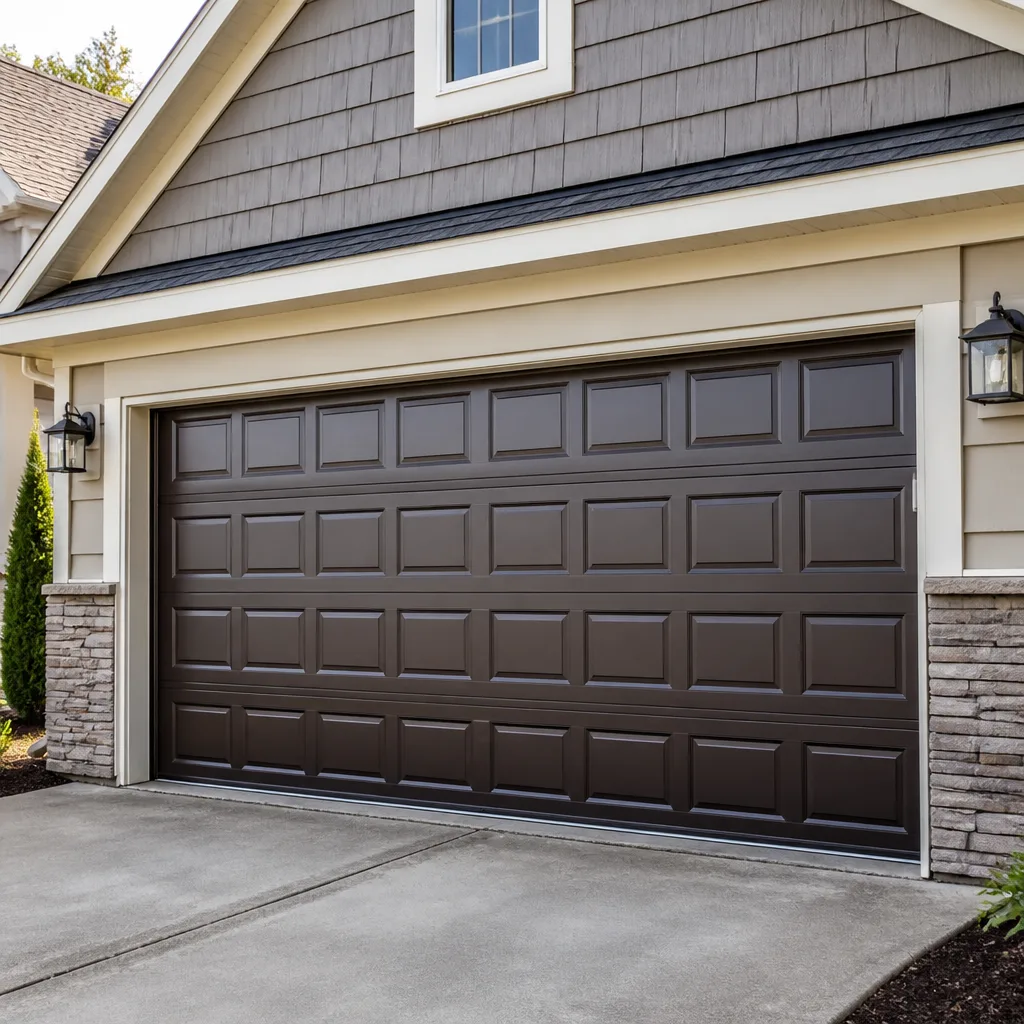 Raised-panel steel
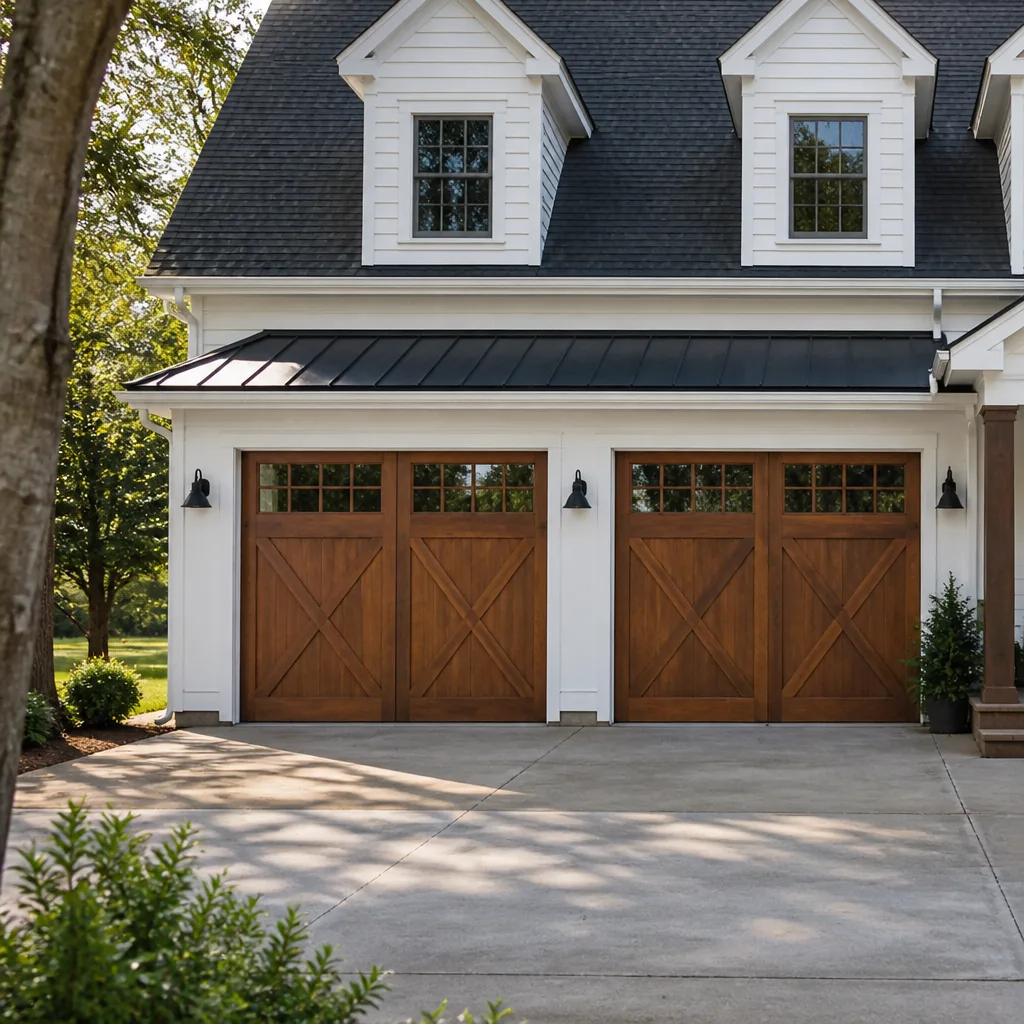 Carriage house
 Modern flush
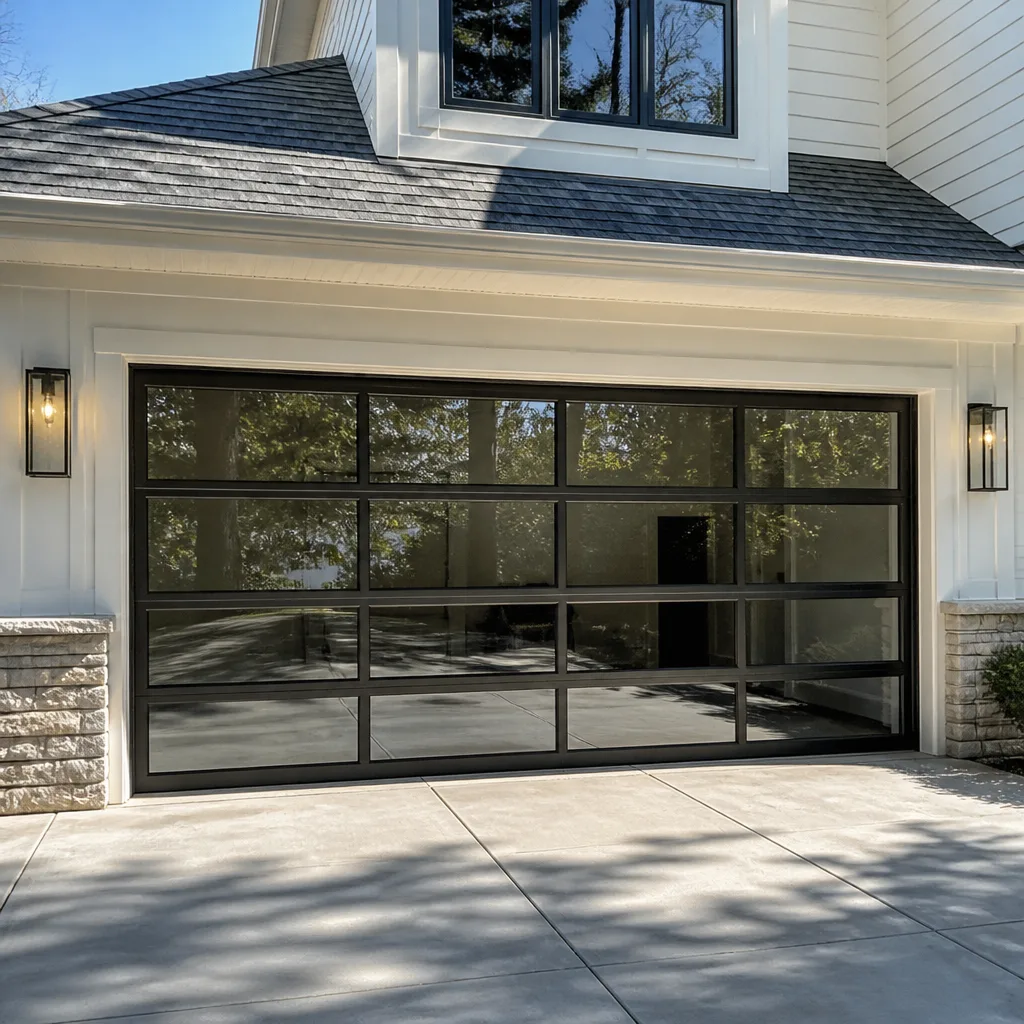 Full-view glass
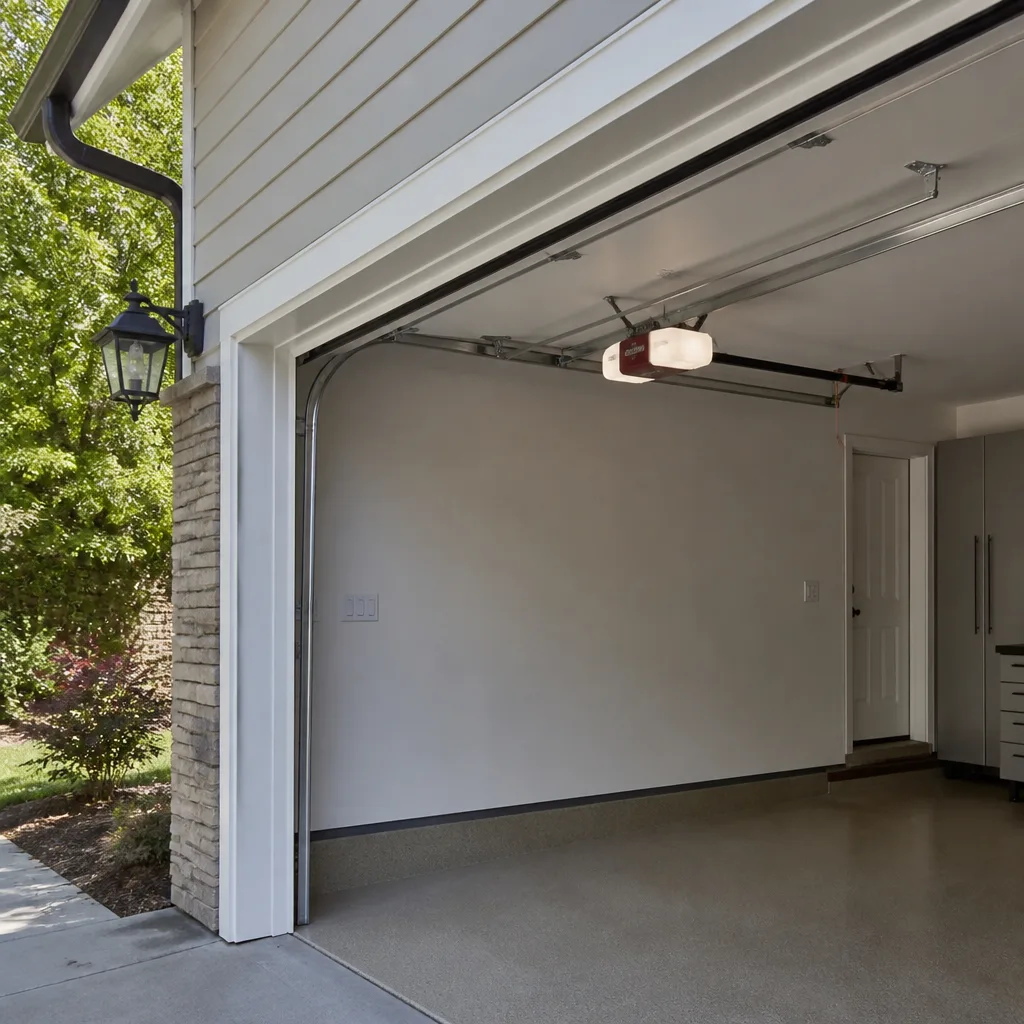 LiftMaster openers
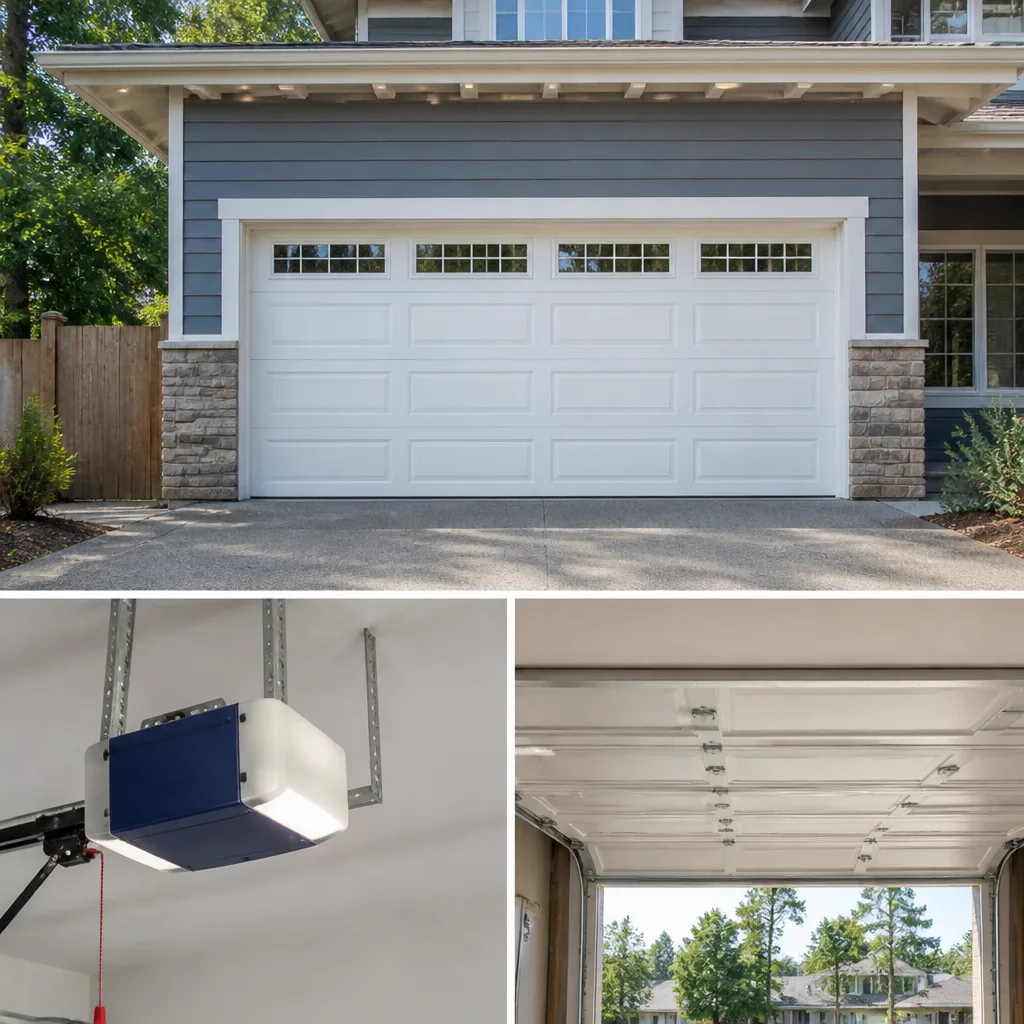 Chamberlain openers
Full 25-point door and opener safety check with every visit - springs, cables, rollers, tracks, and your LiftMaster or Chamberlain opener included
You get a price before we start. It does not change when the pro arrives.
Get your free estimateGarage Door Emergency Preparedness Guide for Hamline-Midway Homes
Most homeowners think of their garage door as a convenience until the morning it refuses to open with the car parked inside. The bigger misconception is what an emergency actually looks like in Minnesota. It’s not always a snapped spring. Sometimes it’s a power outage in a blizzard, a door that won’t close when you need to leave, or a trolley that disengaged and left you yanking a cord that won’t budge. Each of those needs a different response, and a household plan built in advance beats a panic search on your phone at 6 a.m. This guide walks through the three scenarios that matter most for Hamline-Midway homes and gives you the steps, the kit, and the words to use when you call for help.
Quick Answer
When your garage door is stuck, the first move depends on the cause: for a power outage, use the manual release cord and lift the door by hand; for a snapped spring or cable, stop pulling and call for emergency service; for a door that won’t close, secure the opening with a temporary manual lock and don’t force the door. Knowing which of those three situations you’re in is the whole game, and this guide gives you a plan for each one. If you need help now, call (855) 771-4075.
Styles & brands we work with
- Raised-panel steel
- Carriage house
- Modern flush
- Full-view glass
- LiftMaster openers
- Chamberlain openers
Table of Contents
- The Three Garage Door Emergencies Hamline-Midway Homes Actually Face
- How to Use the Manual Release on LiftMaster, Chamberlain, and Genie Openers
- Power Outage Protocol: Manual Override vs Battery Backup
- Re-Engaging the Drive After Power Returns
- Security Emergency: What to Do When the Door Won’t Close
- Cold-Weather Emergency Kit for Your Garage
- Who to Call and How to Describe the Problem
- Preparing Your Hamline-Midway Garage Before Winter
The Three Garage Door Emergencies Hamline-Midway Homes Actually Face
When we say “garage door emergency,” a lot of homeowners picture one thing: the door came off its tracks. In practice, the calls we handle in Hamline-Midway fall into three distinct categories, and each has a different response. Understanding which one you’re dealing with stops you from making the problem worse and gets you to the right solution faster.
Scenario one: power outage during a storm. A winter storm knocks out the grid, and your opener is dead. The door itself is fine. You need to get the car out manually, and that means knowing where the release cord is and how to use it without breaking it. This is the most recoverable of the three and the one most tied to preparation.
Scenario two: mechanical failure with the car trapped inside. A spring breaks, a cable snaps, or the opener motor dies with the door in the down position. The car is stuck. You can’t lift the door by hand because a broken spring means the door’s full weight is unsupported, which is dangerous. This is where you call for emergency service rather than attempt a fix yourself.
Scenario three: a door that won’t close. The door goes up but stops short on the way down, or reverses immediately. The garage stays open all night, and your tools, bikes, and stored belongings are exposed. This is a security emergency, and the response is a temporary manual lock while you wait for a technician.
Each of the three scenarios is covered in depth below. The point of separating them is simple: pulling the manual release cord during a broken-spring emergency does nothing useful and can drop the door on you. The scenario determines the step.
How to Use the Manual Release on LiftMaster, Chamberlain, and Genie Openers
Every residential garage door opener has a manual release, but the location and method vary by brand. LiftMaster and Chamberlain use nearly identical designs (Chamberlain makes LiftMaster, so the mechanics are the same). Genie openers use a similar trolley system with a different release mechanism. Here’s how to handle each one.
LiftMaster and Chamberlain: Look for a red or aluminum T-handle hanging from a cord attached to the trolley on the opener rail. Grab the handle (not the bare cord) and pull straight down, then toward the door. The trolley disengages from the carriage, and you can lift the door by hand.
Genie: Genie openers typically have a similar pull cord attached to the trolley. The handle may be a loop or a small T. Pull straight down to disengage. Some Genie models require a slight pull toward the door after the initial downward pull.
The step most people skip: When the door is in the down position, the trolley is under tension from the door’s weight. If you grab the cord and yank it straight down hard, you’re fighting that tension and the cord can snap at the knot. The correct move is to lift the door slightly first (with one hand, keeping the other on the release handle), which relieves the tension, then pull the handle. On a LiftMaster, Chamberlain, or Genie, this one extra step is the difference between a clean release and a broken cord.
If the door is heavy when you lift it by hand, that’s a sign the springs have failed. Stop, put the door back down slowly, and call for service. A properly balanced door lifts with one hand and stays in place at any height. A door that feels like dead weight is telling you something.
Power Outage Protocol: Manual Override vs Battery Backup
Manual override is free and works on any opener, but it requires you to be home, remember the release procedure, and physically lift the door. Battery backup keeps the opener operational during an outage without any manual steps. Whether you have one depends on your opener model.
Do you have a battery backup opener?
LiftMaster and Chamberlain make battery backup units (LiftMaster’s are marketed under the “Elite” line, Chamberlain’s under “B970” and similar). Genie has its own battery backup line. If your opener has a backup battery, the opener runs on battery for a limited number of cycles when the power goes out. You can keep operating the door with your remote or wall control until the battery drains. Check your opener’s manual or the wall control for a battery status light. If you don’t have the manual, look for a battery compartment on the motor housing.
If you don’t have battery backup
You’ll use the manual release every time. That’s fine, but it means the release procedure is not optional knowledge. Two practical tips for a Hamline-Midway winter:
- Test the manual release before winter, not during a blizzard. Pull the cord in mild weather, lift the door by hand, and then re-engage. Knowing the motion in advance saves you fumbling with gloves in the dark.
- If your opener is old enough that you’re not sure it has a backup, it probably doesn’t. Battery backup openers are a relatively recent feature. If being stranded during a power outage is a real concern (it is for anyone who parks in an attached garage on a Hamline-Midway street), a new opener with battery backup is worth considering. We can quote a garage door opener repair or replacement.
Whichever path you use, the rule is the same: don’t force anything. A manual release that won’t budge, or a battery backup that won’t run the door, means something else is wrong. Stop and call.
Re-Engaging the Drive After Power Returns
Getting the door open by hand is half the job. Reconnecting the opener to the door once power is back is where a lot of homeowners cause damage, usually by forcing the trolley or by running the opener with the carriage still disengaged.
Here’s the correct sequence:
- Lower the door fully by hand. Gently pull it down to the closed position. Do not let it drop.
- Re-engage the trolley. On a LiftMaster or Chamberlain, push the release handle back up toward the opener or, on some models, simply run the opener and it will re-engage when the trolley meets the carriage. On a Genie, the trolley typically re-engages by running the opener. Check your manual if you’re not sure.
- Watch the door cycle. Press the wall control and observe the door through one full open-and-close cycle. Listen for grinding, scraping, or a door that reverses before reaching the floor.
- If the trolley won’t re-engage, stop. Forcing it can bend the rail or strip the carriage. This is a repair, not a homeowner fix.
The one thing to never do: run the opener while the trolley is still disengaged and the door is up. That’s the move that damages the trolley and can leave you with a repair bill on top of the original outage. On a Raynor or LiftMaster rail system, the trolley travels the full length of the rail and can bind or break at the end if it has nothing to carry.
If you re-engage and the door runs normally, you’re done. If the door runs rough, reverses, or won’t fully close, that’s a symptom of a separate problem (limit settings, travel adjustment, or a failing component) and it’s time for a diagnostic.
Security Emergency: What to Do When the Door Won’t Close
A door that won’t close is a security problem, especially on a Hamline-Midway block where the garage may be detached and set back from the house. You can’t leave it open all night, but you also can’t force a malfunctioning door shut without risking damage to panels, tracks, or the opener. The middle ground is a temporary manual lock that secures the opening without touching the door’s mechanism.
Here’s the response sequence:
- Lower the door as far as it will go manually (with the opener disengaged, if needed). If it stops partway, don’t force it.
- Use a manual slide lock or a C-clamp on the track just above the bottom roller to prevent the door from being lifted. A C-clamp on the vertical track, tightened against the roller, is a standard temporary hold that won’t damage the door as long as it’s placed correctly and removed before the door is operated.
- If the door is fully down but the opener won’t latch it, a manual lock bar or a heavy-duty slide bolt on the inside of the door secures it. These are temporary measures, not a permanent fix.
- Do not tape, wedge, or block the door’s travel path. Objects in the door’s path can damage the bottom seal or cause the opener to reverse unpredictably the next time it’s used.
- Call for emergency service. A door that won’t close usually points to a misaligned safety sensor, a limit switch out of adjustment, or a track obstruction. Those are diagnostic repairs, not homeowner fixes.
If the door is stuck open and you can’t secure it, the honest advice is to move anything valuable out of the garage until it’s fixed. We’ve seen doors in Hamline-Midway sit open for a night because the homeowner didn’t want to pay for an emergency call, and the cost of what walked away was higher than the service call would have been. Emergency service exists for exactly this situation.
Cold-Weather Emergency Kit for Your Garage
A frozen threshold, a seal that ices to the floor, or a bottom weatherstrip that cracks in the cold can all strand a vehicle. A small kit kept in the garage means you can deal with the small stuff without a service call. Here’s what belongs in it.
- A stiff-bristle brush and a plastic ice scraper. Clear snow and ice from the threshold before opening the door. A door forced up over an ice dam can bend the bottom panel or tear the seal.
- An extension cord and a hairdryer (or a heat gun on low). To thaw a frozen threshold or a seal iced to the floor. Never use a torch or open flame near a garage door; the seal and panel materials are flammable.
- Ice melt or sand. For the apron in front of the door. A slick apron is how doors get hit by cars pulling in and out.
- A flashlight and spare batteries. The manual release procedure in the dark is a lot harder without light.
- A pair of work gloves. The manual release cord and the door’s bottom edge are both hard on bare hands in the cold.
- The owner’s manual for your opener. If you have it, keep it in a plastic sleeve in the garage. If you don’t, note the brand and model on a card. LiftMaster, Chamberlain, Genie, and Raynor manuals are all findable online once you know the model number.
One more cold-weather item worth having: a can of silicone spray or a tube of garage door lubricant. A door that groans and hesitates in the cold is often just dry. A light application on the rollers, hinges, and spring (not the track) quiets it and reduces strain on the opener. It’s not a fix for a failing part, but it’s the maintenance step that prevents a lot of winter calls.
Who to Call and How to Describe the Problem
The single biggest time-waster in a garage door emergency is a vague description. “My door is broken” tells a technician nothing about what parts to bring. A specific description lets the dispatcher route the right technician with the right parts, so the job gets fixed on the first visit instead of turning into a diagnostic call followed by a second visit.
Here’s what to have ready when you call:
- The brand and model of your opener (LiftMaster, Chamberlain, Genie, Raynor, and so on), if you can see it. It’s on a label on the motor housing.
- The door’s current position (fully open, fully closed, stuck partway) and whether the car is inside.
- What you heard or saw when it failed. A loud bang usually means a spring. A grinding noise usually means a gear or bearing. A door that reverses immediately usually means a sensor or limit issue.
- Whether the opener runs but the door doesn’t move. That’s usually a disengaged trolley or a broken spring, and the two need different responses.
- Whether the door is safe to leave as-is overnight. If it won’t close, say so; that changes the urgency.
When you call a garage door specialist, the description also tells them whether to bring spring stock, a trolley, a sensor, or opener parts. General handyman services often don’t carry garage door parts at all, which is why a specialist call is faster even when it costs a bit more up front. We work on the brands already in Hamline-Midway garages (LiftMaster, Chamberlain, Genie, Clopay, Amarr, Wayne Dalton, Craftsman, and Raynor), so the odds are good we’ve seen your system’s quirks before we arrive.
Preparing Your Hamline-Midway Garage Before Winter
Most garage door emergencies in this climate are predictable. A little preparation in the fall prevents a lot of calls in January and February. Hamline-Midway’s housing stock includes a mix of older detached garages and attached garages on homes along the Midway and Hamline corridors, and the older doors in particular benefit from a pre-winter check.
Here’s the pre-winter checklist:
- Test the balance. Disengage the opener, lift the door halfway by hand, and let go. A balanced door stays put. A door that falls means the springs are tired and due for replacement.
- Lubricate the moving parts. Rollers, hinges, and the spring (not the track) get a light coat of garage door lubricant. This is the single cheapest thing you can do to extend the door’s life.
- Check the weather seal. Look for cracks, gaps, and hard spots along the bottom. A seal that’s losing its flexibility will ice to the floor in the first hard freeze.
- Test the safety sensors. Wave an object in front of the sensors while the door is closing. It should reverse. If it doesn’t, that’s a repair before winter, not during.
- Inspect the tracks for dents or debris. A track that’s out of alignment will bind in the cold when metal contracts.
- Clear the apron and threshold of debris. Snow, leaves, and ice packed against the threshold are a common cause of doors that won’t close in the first storm.
If you’d rather have a professional look it over, a pre-winter tune-up is a reasonable investment, and it’s a good time to also ask about a garage door repair if you’ve been putting off a noisy roller or a reversing sensor. For a door that’s past repair, a garage door installation is the better call, and we quote that work in person so the price you agree to is the price you pay before any work starts.
Common Mistakes to Avoid
- Yanking the manual release cord without lifting the door first. In the down position, the trolley is under tension. Pull the handle straight and hard and the cord can snap. Lift the door slightly first to relieve the tension, then pull.
- Trying to lift a door with a broken spring. A door with a failed spring is much heavier than it looks, and the remaining spring or cable can let go under load. Stop and call for service. This is the one mistake that causes real injuries.
- Running the opener with the trolley disengaged. After a manual release, don’t press the wall control until the door is fully down and the trolley is re-engaged. Running it disengaged can bend the rail and strip the carriage.
- Forcing a door that won’t close. Pushing a stuck door down can bend a panel or tear a seal. Use a temporary lock to secure the opening and let a technician diagnose the cause.
- Using a torch or open flame to thaw a frozen seal. Garage door seals and panels are flammable. Use a hairdryer or warm water instead.
- Leaving a stuck-open door unsecured overnight. A garage that stays open for a night in Hamline-Midway is an easy target. Secure it with a temporary lock or move valuables out, and call for emergency service.
- Calling the wrong kind of help. A general handyman is unlikely to carry springs, cables, or opener parts. For anything beyond a simple adjustment, call a garage door specialist so the first visit is the fix.
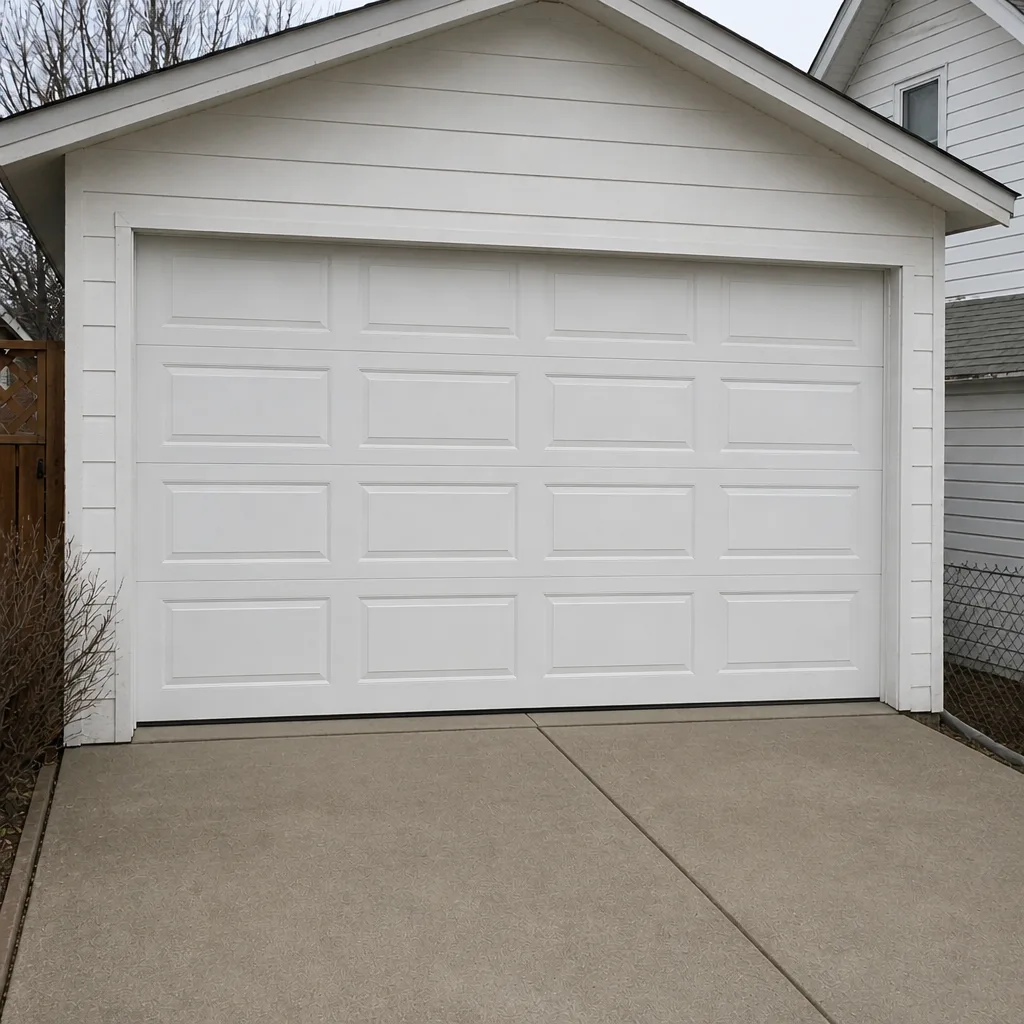
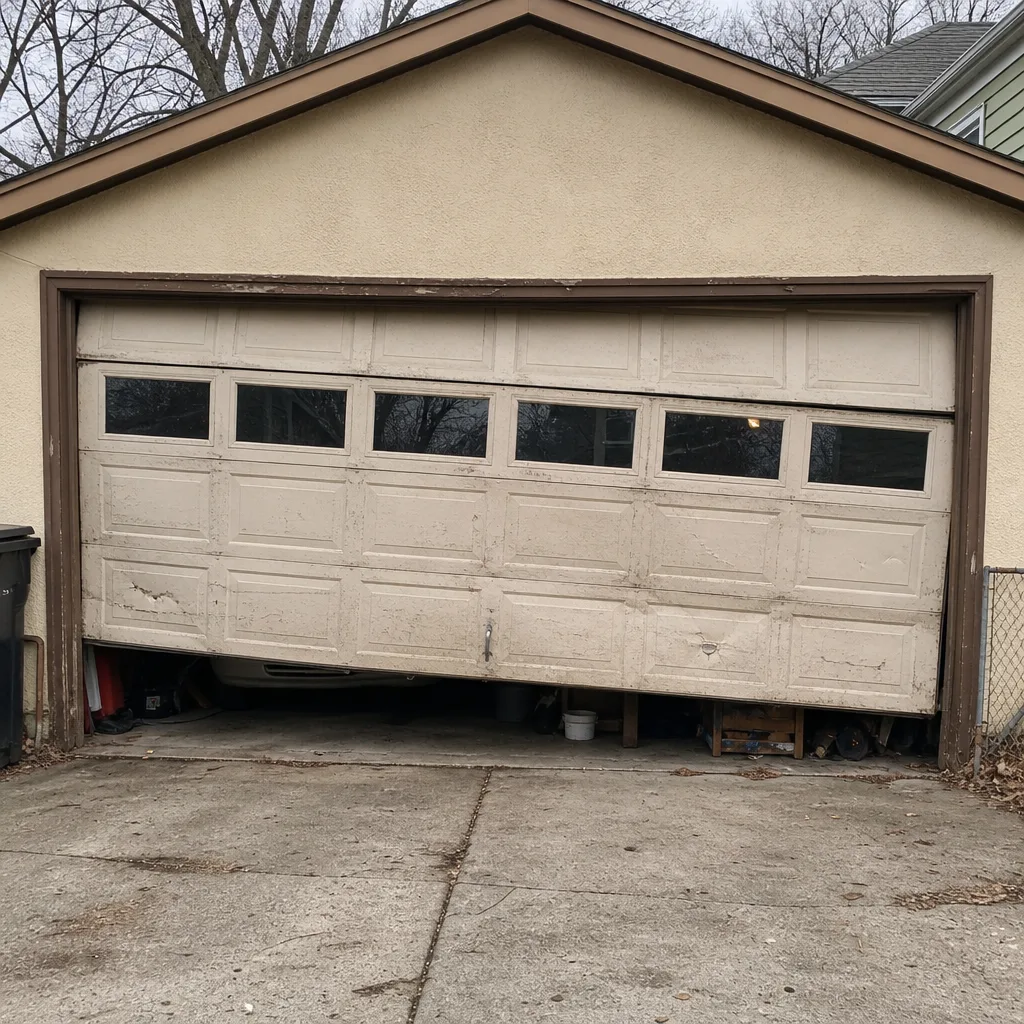
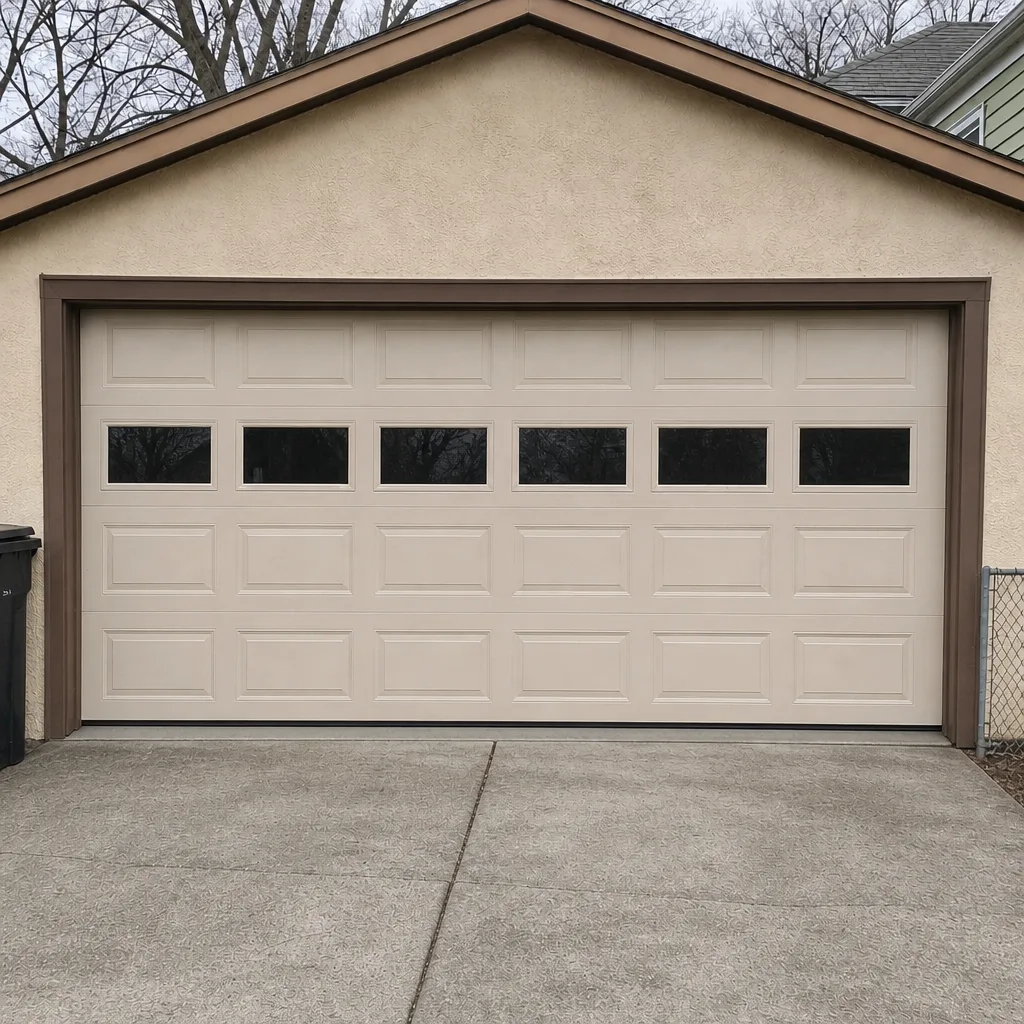
See the difference
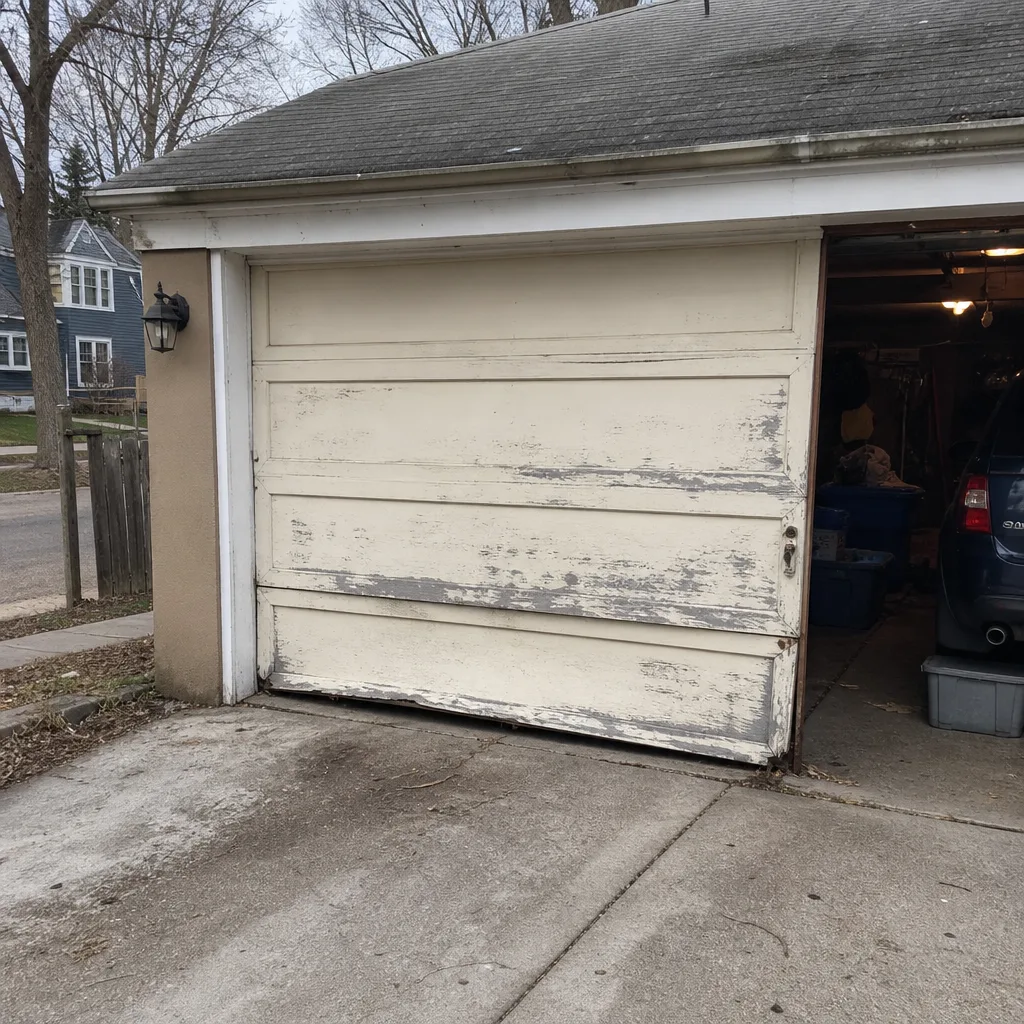 Before
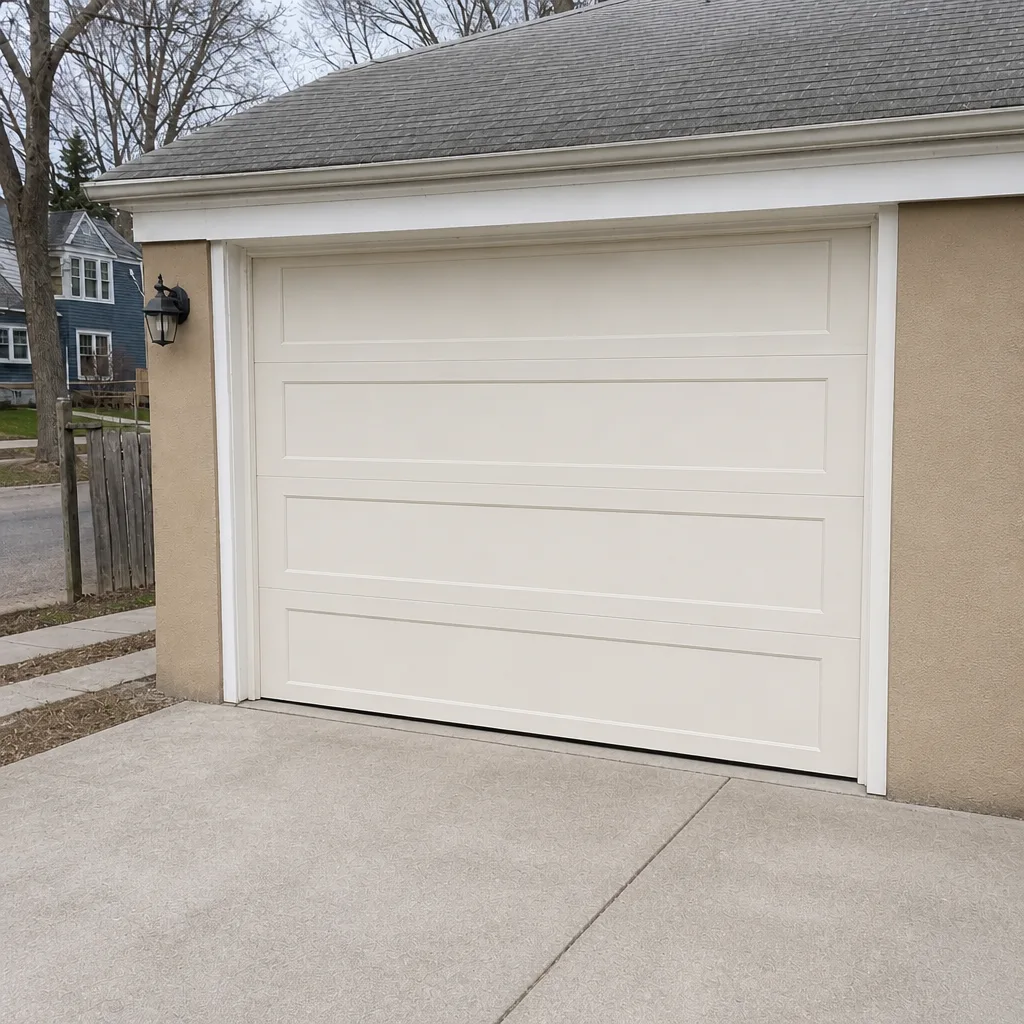 After
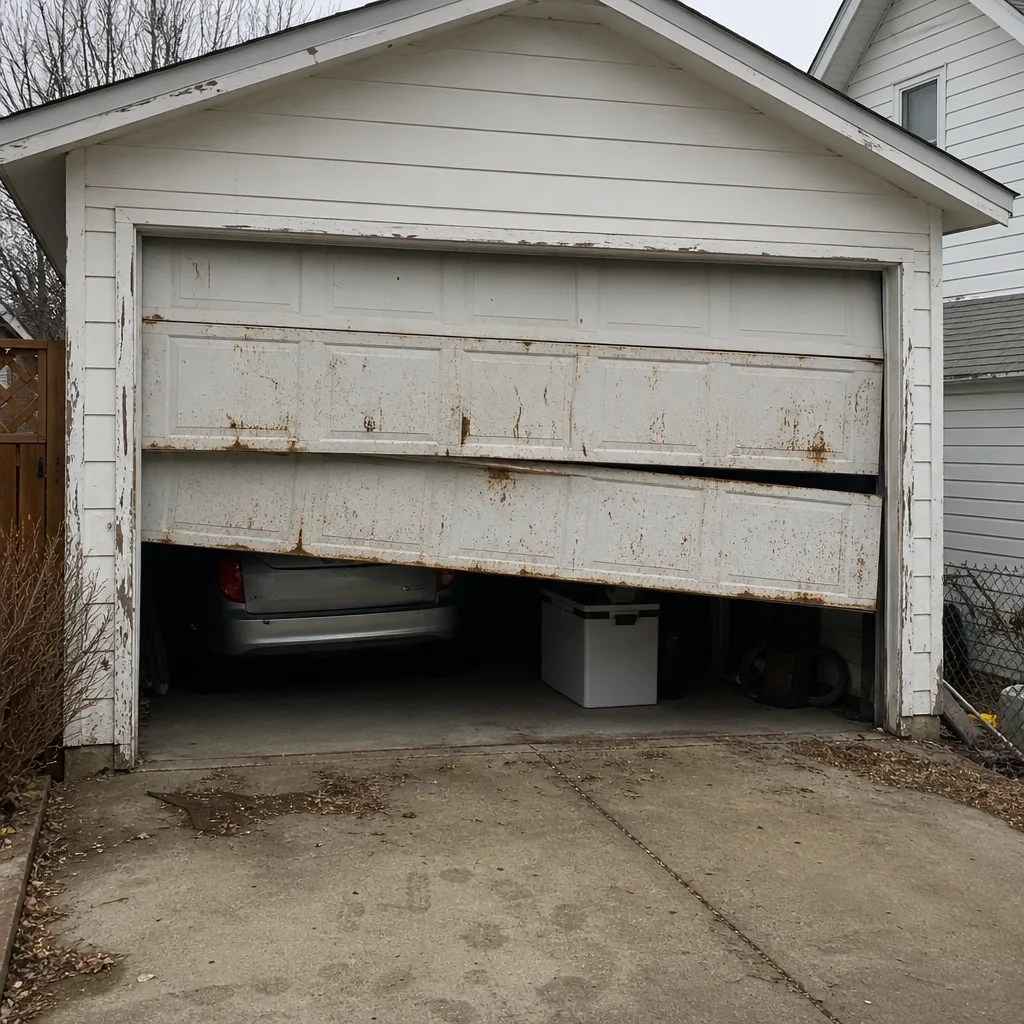 Before
 After
 Before
 After
When to Call a Professional
Some garage door problems are genuinely a call. A snapped spring, a broken cable, a door that’s come out of its tracks, an opener that hums but won’t move the door, and a door that won’t close at night all warrant professional help. A door stuck in the down position with the car inside and a broken spring is a safety matter, not a DIY job. And if a door is stuck open when you need it secure, emergency service exists for exactly that. Garage Door Repair Hamline-Midway offers free estimates in Hamline-Midway, and our technicians have up to 8 years of experience across the major brands. Call (855) 771-4075.
Frequently Asked Questions
First, figure out why. If the power is out and the door is otherwise fine, use the manual release (lift the door slightly, then pull the handle) and lift it by hand. If a spring has snapped or a cable is broken, don’t lift the door at all; call for service. If the door won’t close, secure the opening with a temporary lock and call for help. In any case, don’t force anything. Call (855) 771-4075 if you’re not sure which situation you’re in, and we’ll walk you through it.
Yes. Emergency garage door service is a core offering, not an add-on. A door that won’t close, a broken spring with the car trapped, or a door stuck open overnight are all calls we take. One thing to know: if the problem is a full door replacement or new installation, that’s a measured and scheduled job rather than an emergency, and we’ll give you a written quote after measuring. Call (855) 771-4075.
Look for a battery compartment on the motor housing or a battery indicator light on the wall control. LiftMaster, Chamberlain, and Genie all make battery backup openers, but older units usually don’t have one. If you can’t tell, check the model number against the brand’s manual online. If you don’t have backup, plan on manual release for outages; if you do, note that the battery only runs a limited number of cycles. Call (855) 771-4075 if you’d like us to check.
No. The price is quoted and agreed before any work starts. We diagnose the problem, give you a written price, and only begin work once you approve it. If we discover something different during the repair, we come back to you before doing anything extra. That’s how it works on a broken spring, an opener repair, or a door that needs replacing. Call (855) 771-4075 for a free estimate.
Yes. The local professional we connect you with is licensed and insured as their state requires, and every technician working on a garage door call is a garage door specialist, not a multi-trade generalist splitting time between plumbing and drywall. Garage doors are all we do, which means faster diagnosis and fewer return trips. Call (855) 771-4075 to book.
Secure it with a temporary manual lock: lower the door as far as it will go by hand, clamp or bolt it to prevent lifting, and remove anything valuable from the garage if the opening can’t be fully closed. Don’t force the door down, and don’t leave it open if you can avoid it. Then call for emergency service. Call (855) 771-4075 and describe whether the car is inside and whether the door is fully open or partway down; that tells us what to bring.
The Bottom Line
Garage door emergencies in Hamline-Midway come in three flavors: power outage, mechanical failure, and security failure. Each needs a different response, and each is manageable with a little planning. Learn where your manual release is and how to use it without breaking the cord. Know whether your opener has a battery backup. Keep a small cold-weather kit in the garage. And when the door won’t close or a spring has failed, call a specialist rather than forcing it. If you want help building your plan or you’re dealing with a door right now, call (855) 771-4075 for a free estimate. For everyday repairs, our Garage Door Repair Hamline-Midway team is ready when you are.
Written by the team at Garage Door Repair Hamline-Midway.